Bintan Snorkeling: What You'll See and When to Go
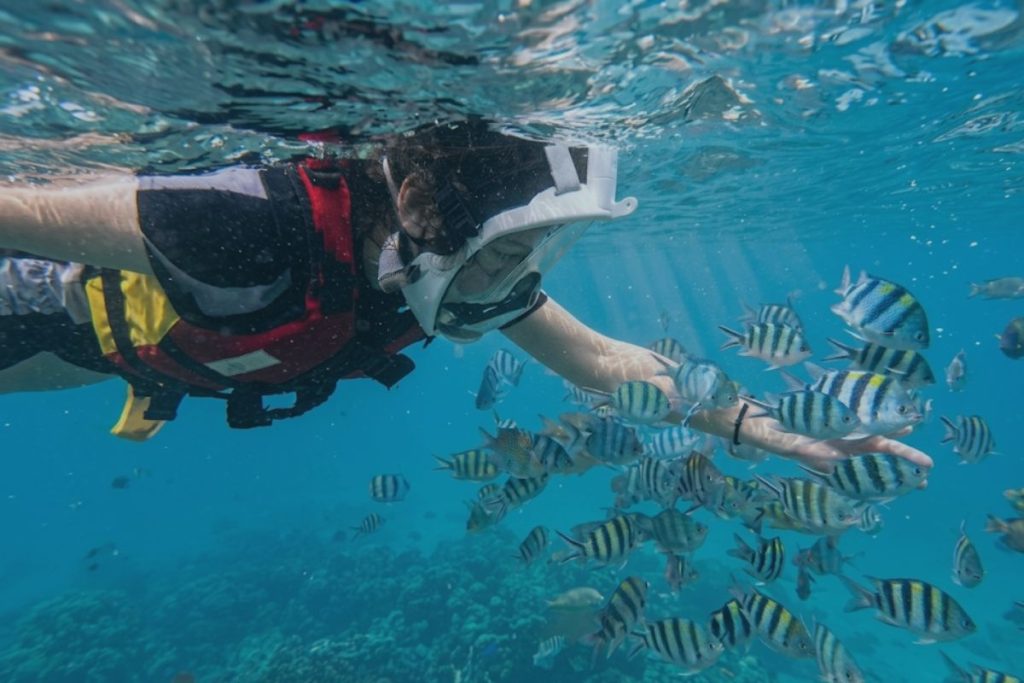
Snorkeling in Bintan isn’t limited to one location.
Some hotels within the Bintan Resort area offer their own snorkeling activities right off the beach, while other trips head out to a kelong, a traditional wooden hut built on stilts over the sea.
For kelong trips, boats leave from a jetty in the Trikora area of East Bintan, not from Trikora Beach itself, and the kelong is reached by a short boat ride further out from there.
The full itinerary for snorkeling at the kelong is available on the Bintan Snorkeling Tour page.
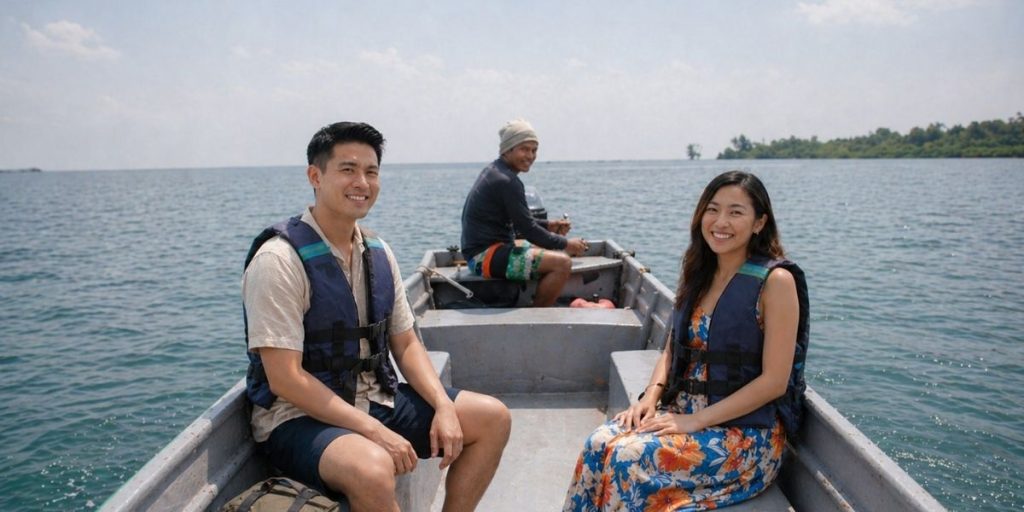
Visitors searching for snorkeling in Bintan may be surprised that most tours work this way.
Several kelongs operate in the Trikora area, each run by a different local operator, with slightly different facilities, some have a bathroom, kitchen, or private cabin for changing.
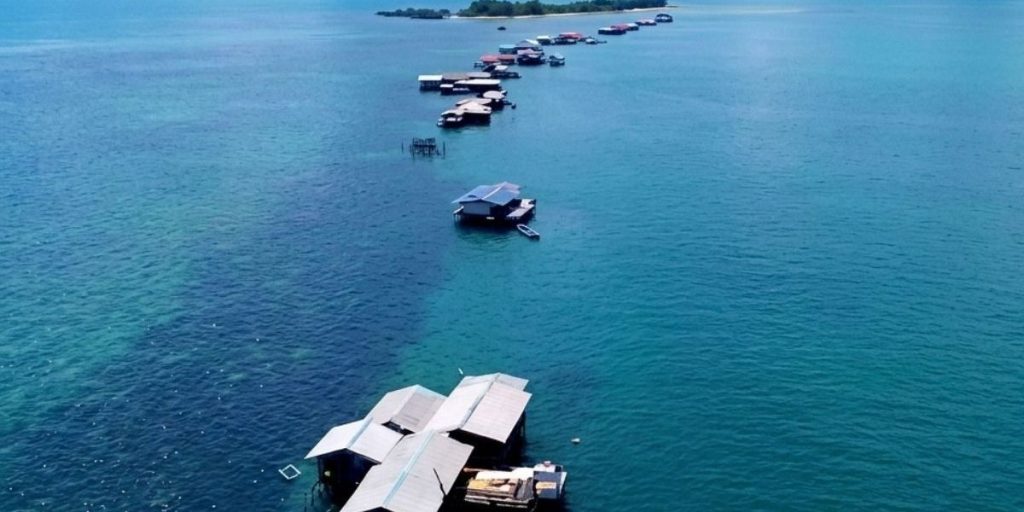
White Sands Island (Pulau Beralas Pasir) is a separate destination from the kelong trips and is currently closed. Some tours still mention it, so it’s worth confirming with the operator first.
Hotels in the Bintan Resort area are usually about an hour from the jetty. Morning departures are best, since the water tends to be calmer and clearer before noon.
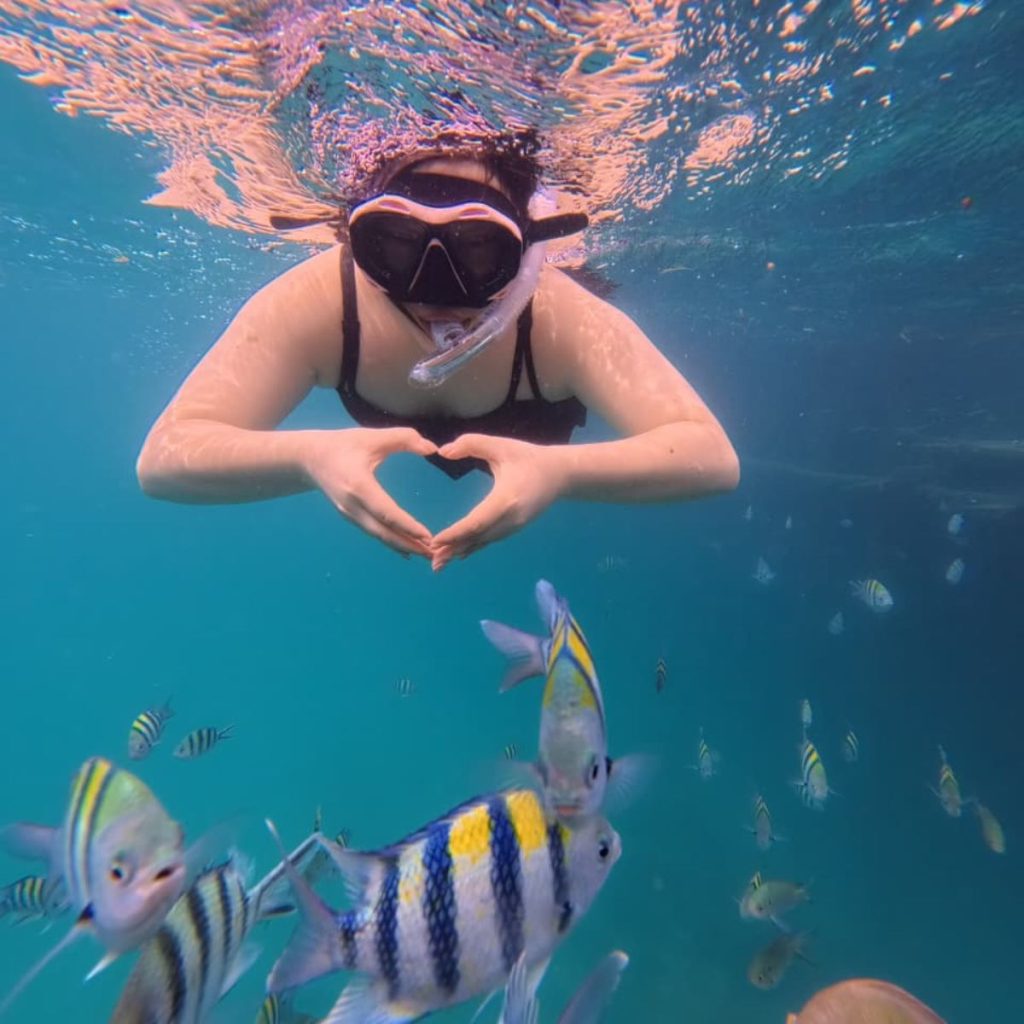
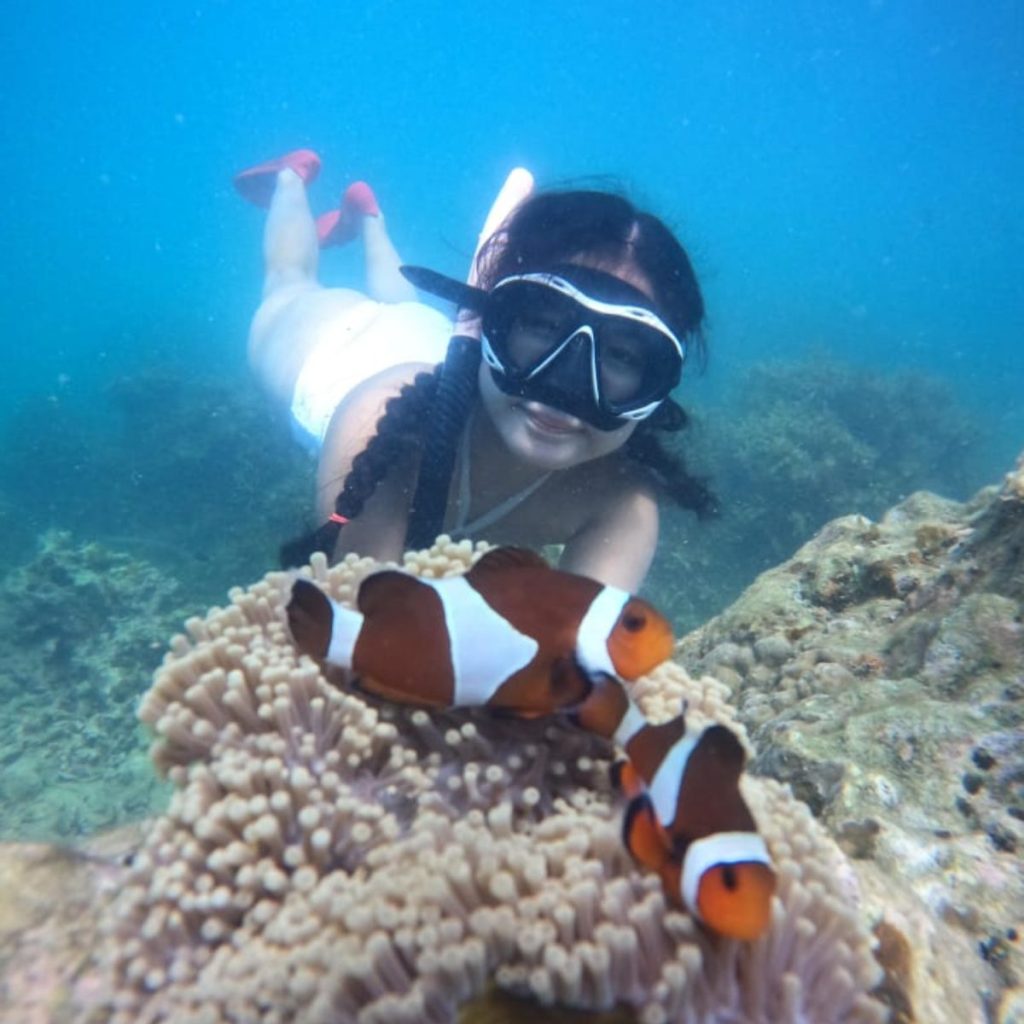
Once in the water, clownfish and reef fish are commonly spotted around the coral, though visibility depends on conditions that day.
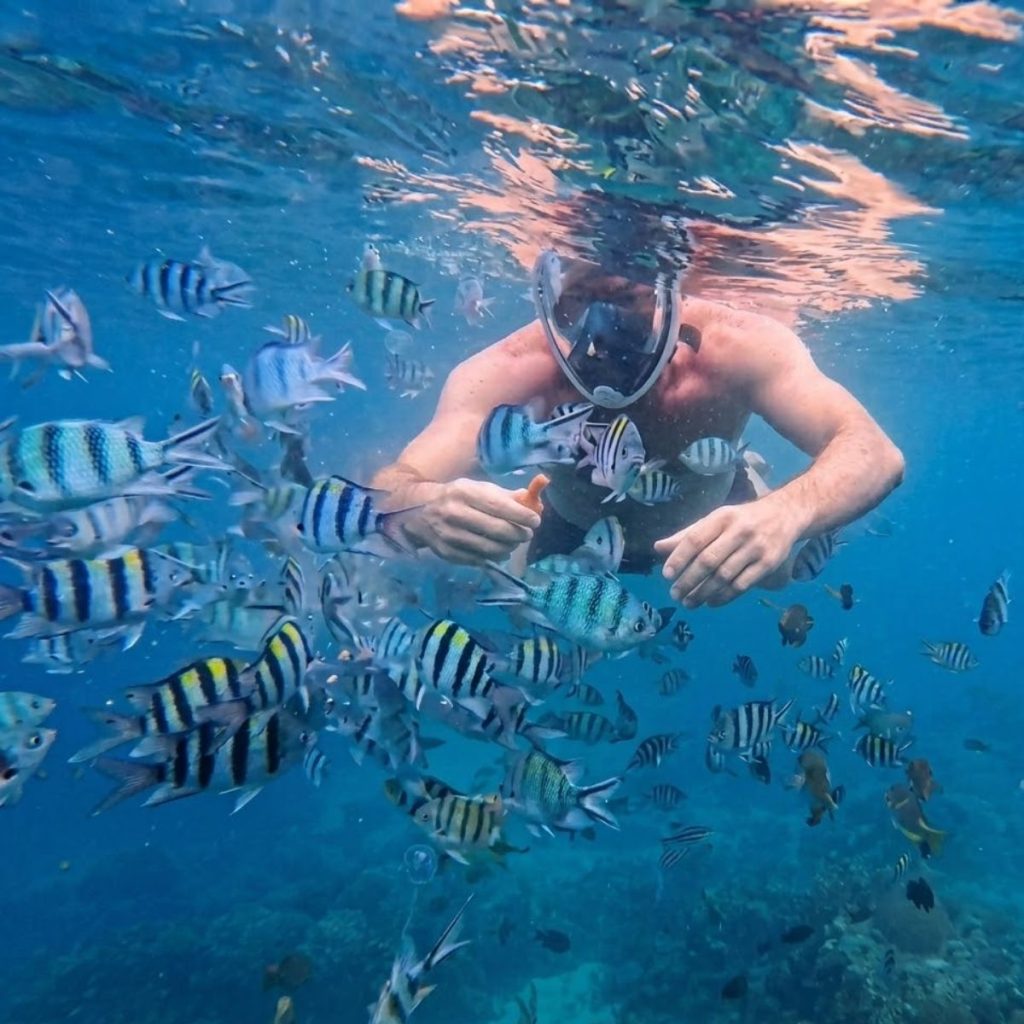
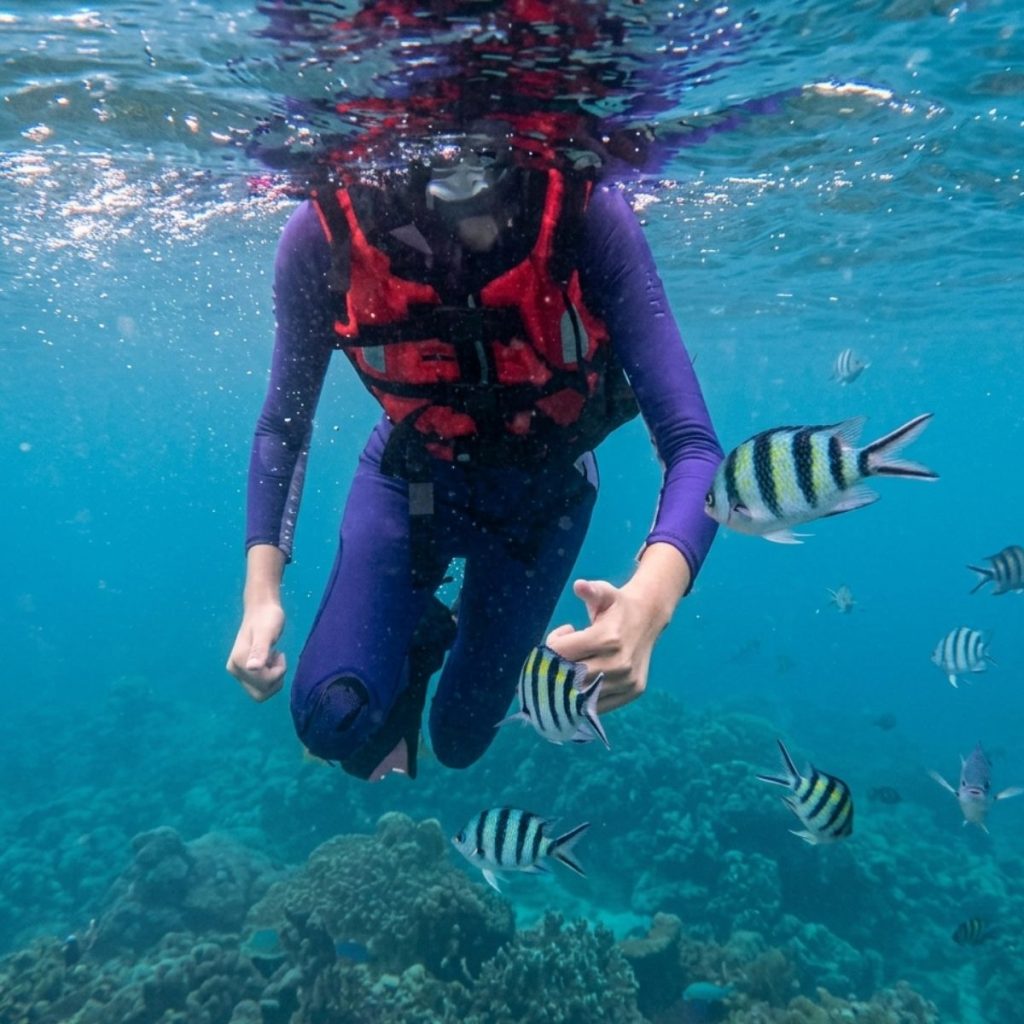
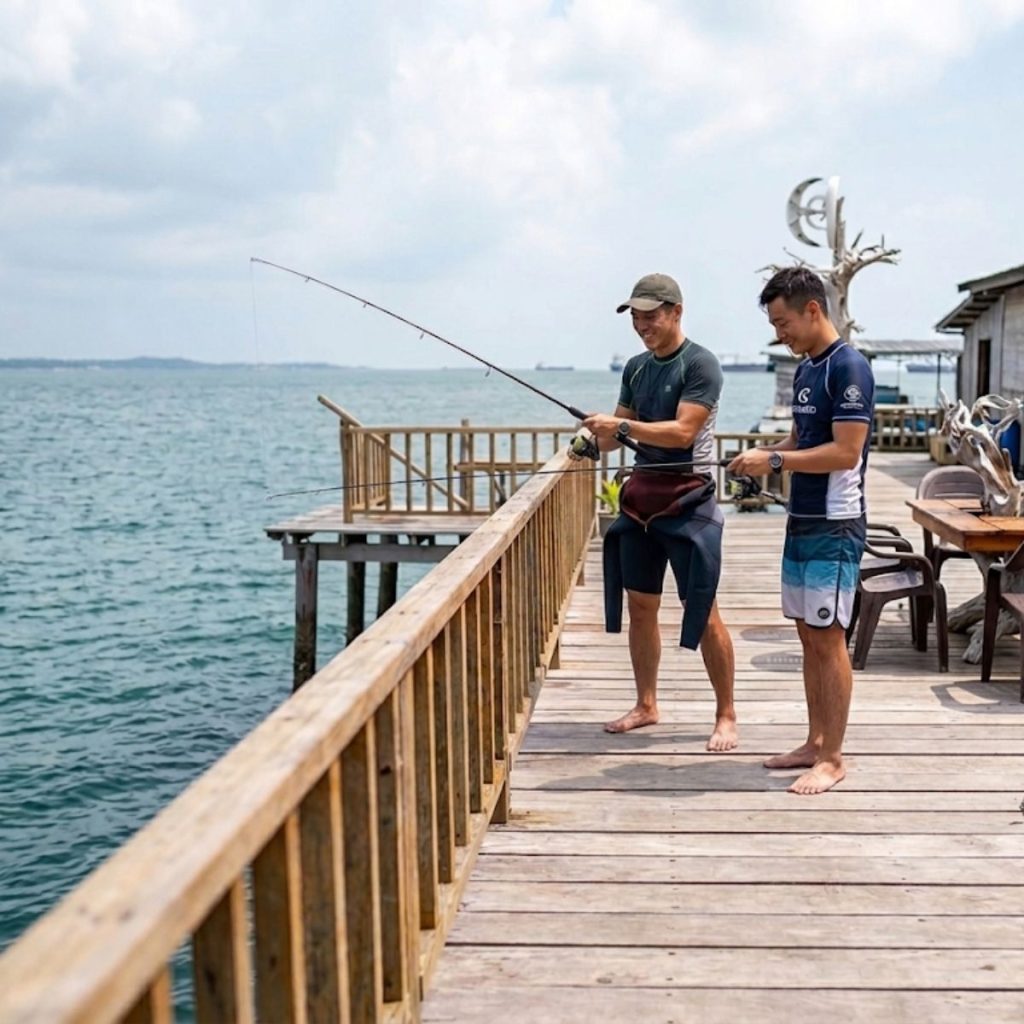
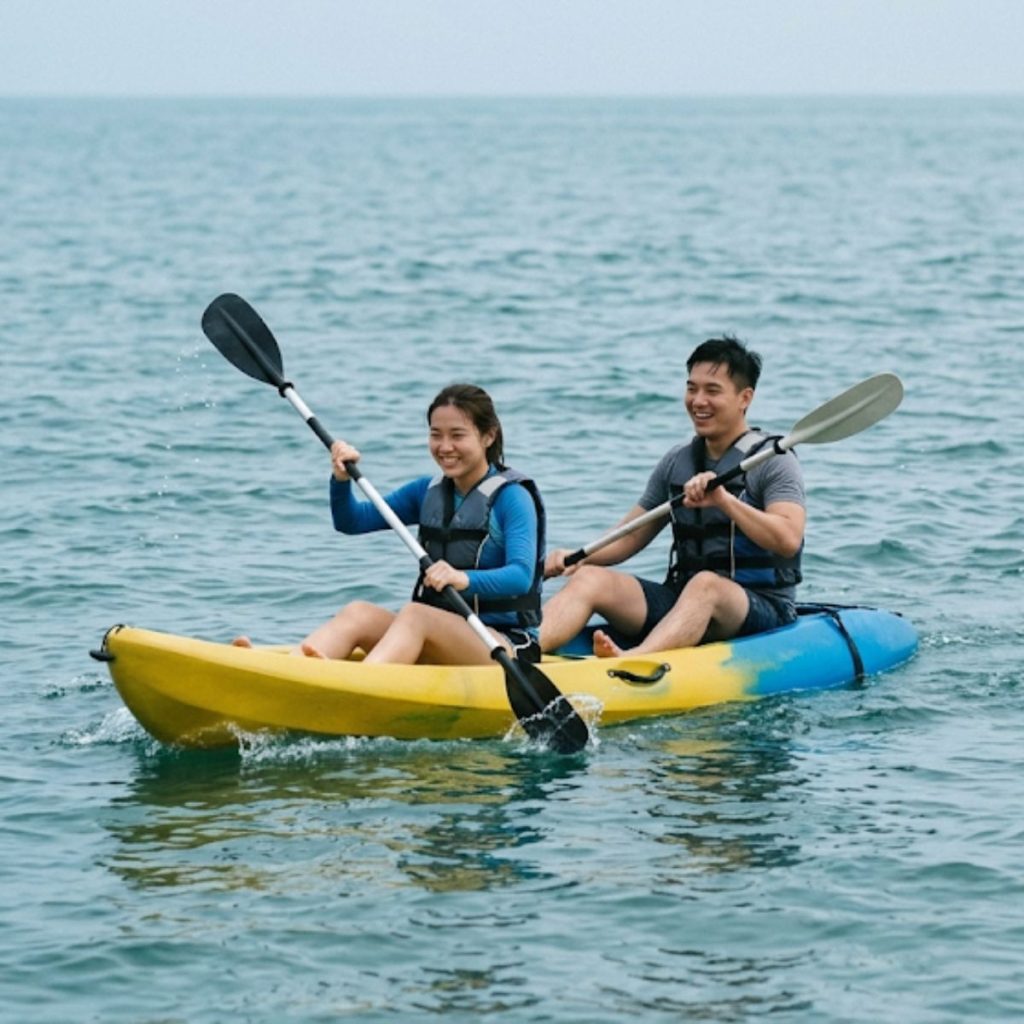
Kayaking and light fishing are often available as add-ons.
Weather matters most from December to February, when monsoon season brings rougher seas and lower visibility.
Policies for bad weather vary by operator, so it’s worth checking before booking.
Bintan Snorkeling Tour at Kelong is personally planned and arranged by Bintan Travel Guide (BTG), Bintan’s local travel specialist.
The trip is designed to make the experience straightforward and well-supported from start to finish, with private land transfer, boat transfer to the kelong, a local guide, and snorkeling equipment provided.
Guests can also bring their own snorkeling equipment if preferred.
Lunch is not included, allowing guests to choose what suits them best, while BTG can help arrange a stop at a nearby restaurant along the way upon request.
For more information, visit the Bintan Snorkeling Tour page.
Frequently Asked Questions
Most snorkeling in Bintan happens at a kelong, a traditional wooden hut built on stilts off Trikora in East Bintan, reached by a short boat ride from the jetty. The water around the kelong tends to be calmer and clearer than closer to shore, which is why tours are based there rather than at Trikora Beach itself.
Clownfish are among the most commonly spotted fish around the coral near the kelong, along with tropical reef fish. Visibility depends heavily on how clear the water is on a given day.
Yes, the water around the kelong is generally calm and suited to beginners. Local guides stay with guests throughout the session and help first-timers and children put on their gear.
Morning departures before noon usually mean calmer currents and better visibility, since conditions tend to shift later in the day. December through February is generally the less favorable stretch, as monsoon season brings rougher seas and murkier water.
No, masks, fins, and life jackets are typically provided once guests arrive at the kelong platform, so there's usually nothing extra to arrange on site.
Written by

Sigit Supriadi
Founder & Travel Specialist, Bintan Travel Guide (BTG)
With over 13 years in hospitality across Bintan, from luxury resorts to private villas and islands, and now running Bintan Travel Guide (BTG) since 2023.
I share practical travel information and local insights to help travelers plan with confidence. Every guide reflects local knowledge and up-to-date information on Bintan’s destinations, attractions, and travel logistics